My Piano Studio Practice Workshop 2026
Last year, I was introduced to Molly Gebrian’s book, Learn Faster, Perform Better: A Musician’s Guide to the Neuroscience of Practicing, and it came at just the right time.
I already knew that I wanted to do some kind of practice workshop with my students, but her book gave me a lot more direction for what I wanted that workshop to actually accomplish.
I like to start my studio school year during the last week of August. By that point, most of my students have already been back in school for about two weeks, so they are usually somewhat settled into their routines. That first lesson back is really a welcome back lesson and, in some ways, a reminder that, yes, you are also still a piano student.
Then, during the week of Labor Day, I hold collaborative group classes, or what we call our Collab Classes. The first one of the year is a Practice Workshop. I wanted to create this because I really wanted students to have a reset at the beginning of the school year. We talk about what practice actually is, what I expect them to do at home, how they can make practice fit into their lives, and what they want to accomplish for the year.
This year was my second year doing the workshop. Last year it really did set the tone for the year, and I saw enough positive results from it that I knew I wanted to keep doing it annually.
I did create a Practice Workshop resource with the materials I use, which is available on my resource list.
Click Here for the Practice Workshop Resource!
Starting with snacks and an activity helps with ANY age!
When students come in, I usually have a basket of snacks out for them to grab, along with some kind of age appropriate worksheet or activity. Sometimes it is something educational, and sometimes it is honestly just something fun to do while everyone arrives and gets settled.
This year, I pulled a few older resources out of my digital library. One group worked on music math where they had to add note values, and another had a music symbol hunt and coloring sheet. I had a few other activities mixed in depending on the age of the group.
While they are working on those and eating their snacks, we play a True or False Practice Game. This is one of my favorite parts of the workshop because I mix silly questions with more thoughtful ones. Some are obviously true or false, some are a little trickier, and some are really there because I know they will lead into a good conversation.
Those conversations are actually where I end up talking about a lot of the skill of practicing. We might spend ten or fifteen minutes on the game, but it does not feel like a lecture. We are just talking. The students are giving their opinions, I am asking follow up questions, and we are already starting to think about what effective practice looks like before we ever get to the more formal parts of the workshop.
Mapping Out Their Actual Week
One of the biggest parts of the workshop is helping students figure out where practice realistically fits into their lives.
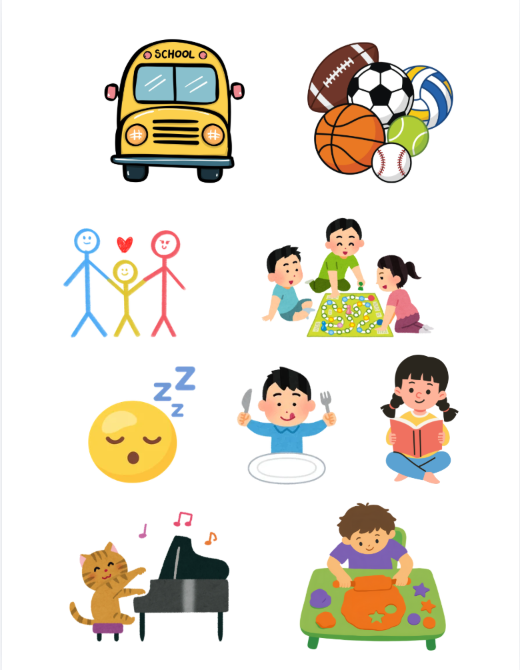
I have them take out a sheet of paper and create seven boxes, one for each day of the week. Then we start filling in the things they already have going on. I made a simple visual in Canva with a school bus, sports equipment, family, friends, sleep, food, quiet time, homework, and piano practice.
We go through everything together. I ask them to think about school, how much homework they normally have, what sports or activities they participate in, whether certain days are usually reserved for family, when they see friends, and when they need downtime. We also talk about sleep and meals because I do not want piano practice to come at the expense of their health.
Once all of that is on the page, we look for the places where piano can realistically fit.
This is always interesting because the students tend to be surprised. Some of them look at their schedule and suddenly realize that they really are very busy and do not have as much open time as they thought. Others discover that they actually have more room in their week than they realized.
We also go around the room and talk about what each student has going on. I think that part is useful because they hear how other students are approaching the same problem. For my homeschool students, piano practice can often become part of their school checklist. For students with very full after school schedules, mornings sometimes work better. I have been surprised by how many students actually prefer practicing before school. Even if they only get ten or fifteen minutes, it gives them a consistent routine.
My high school students are usually the ones who discover that they only have about three realistic practice days. I am actually fine with that. I would rather have them identify three days they can truly use than make a plan to practice six days a week that is never going to happen. Once they know what they realistically have available, then we can talk about how to use that time well.
I also encourage them to attach practice to something that already happens. It might become part of schoolwork, something they do before leaving for school, or something they do immediately after homework. The goal is to make it part of the normal rhythm of their week instead of something they have to remember to squeeze in whenever they happen to think about it.
Playing, Practicing, and Performing
After we map out their schedules, we talk about the difference between playing, practicing, and performing.
That distinction is important because students can easily sit down, play a piece from beginning to end several times, and feel like they practiced. Sometimes they did. Sometimes they mostly played through their music.
This is where a lot of what I have learned from Molly’s book comes into the workshop. We talk about her 1 2 3 Set method, interleaved practice, random practice, recording yourself, brain breaks, and different ways to work on music instead of always starting at the beginning and playing straight through.
One of the biggest ideas I want students to understand is that practice needs to become more specific. Instead of simply deciding to work on an entire phrase five times, I want them to identify what inside that phrase actually needs attention. It could be a fingering, a transition, a rhythm, the balance between the hands, or any other small detail. Once the problem gets smaller and more specific, the student has a much clearer idea of what they are actually trying to improve.
Setting a Goal With Our Honors Program
Another major part of the Practice Workshop is our Honors Program.
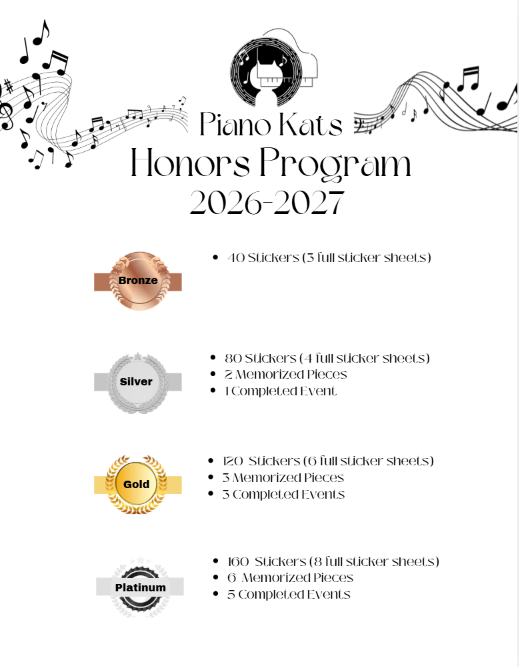
The Honors Program has four different levels that students can choose from for the school year. It is not a competition between students. The purpose is for each student to look at what is realistic for them and choose a goal they want to work toward.
I use practice sticker sheets with twenty stickers on each sheet, and those represent twenty practice days.
NOTE: Sometimes the sticker sheets do not always have exactly 20 spots. So sometimes we adapt with freebie stickers or we have to add a spot.
The first level is Bronze, which requires three completed sticker sheets for the year. This is honestly a very attainable level, and I mainly use it for very young students or students who begin later in the year. Preschoolers are preschoolers, and sometimes they are getting a medal because they made it through the year and I want them to feel successful.
Silver requires four completed sticker sheets, two memorized pieces, and one completed musical event. The event is something in addition to our mandatory spring recital. It might be another recital, an evaluation, playing for church, a talent show, attending a senior recital, or going to a musical event such as an orchestra concert.
Gold is probably the most common goal in my studio. It requires six full sticker sheets, three memorized pieces, and three completed events. I have found that students who reach Gold usually have a very successful year because the requirements encourage consistency, memorization, and participation in musical experiences outside of regular lessons.
Platinum is the most difficult level. It requires eight full sticker sheets, six memorized pieces, and five completed events. I do not have many students reach Platinum, and that is okay. It is supposed to be challenging.
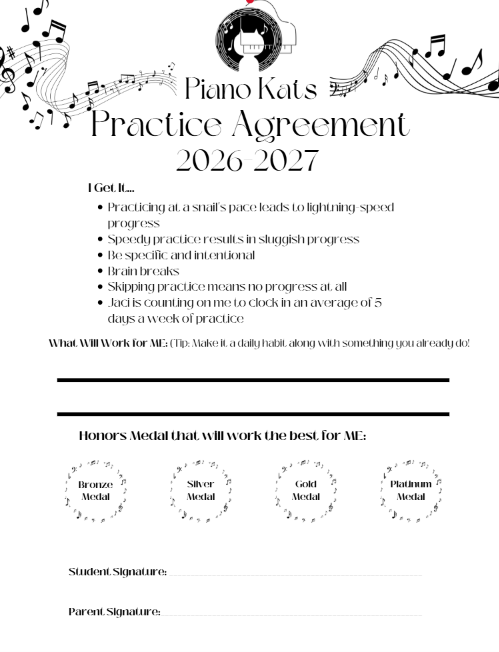
Once students choose the medal they want to work toward, they fill out a practice agreement and sign it. They also have to take it home and have a parent sign it.
I really like involving parents in this part because sometimes students have a very ambitious idea of what they are going to accomplish, and the parent may have a more realistic picture of everything else happening in their life. The opposite can also happen, where a student may underestimate what they are capable of doing.
Either way, I want that conversation happening at home.
Students do not start putting stickers on their practice sheets until the agreement comes back signed. They also receive an Honors Program tracker where we can keep track of practice days, memorized pieces, and events throughout the year. At the beginning of the year, they also receive a copy of the calendar, studio policies, and the Honors Program requirements.
The Brain Activity I Skipped This Year
Last year, we also did a brain pathways activity to help students visualize what happens as the brain learns and strengthens a skill through practice. That activity is included in my Practice Workshop resource.
I did not repeat it with all of my students this year because most of them had already done it last year, and we were also short on time. For my younger students, I did show a short video about the brain during snack time, and they enjoyed that.
Sometimes there are things I really like that simply do not need to happen every single year.
The Practice Abacus
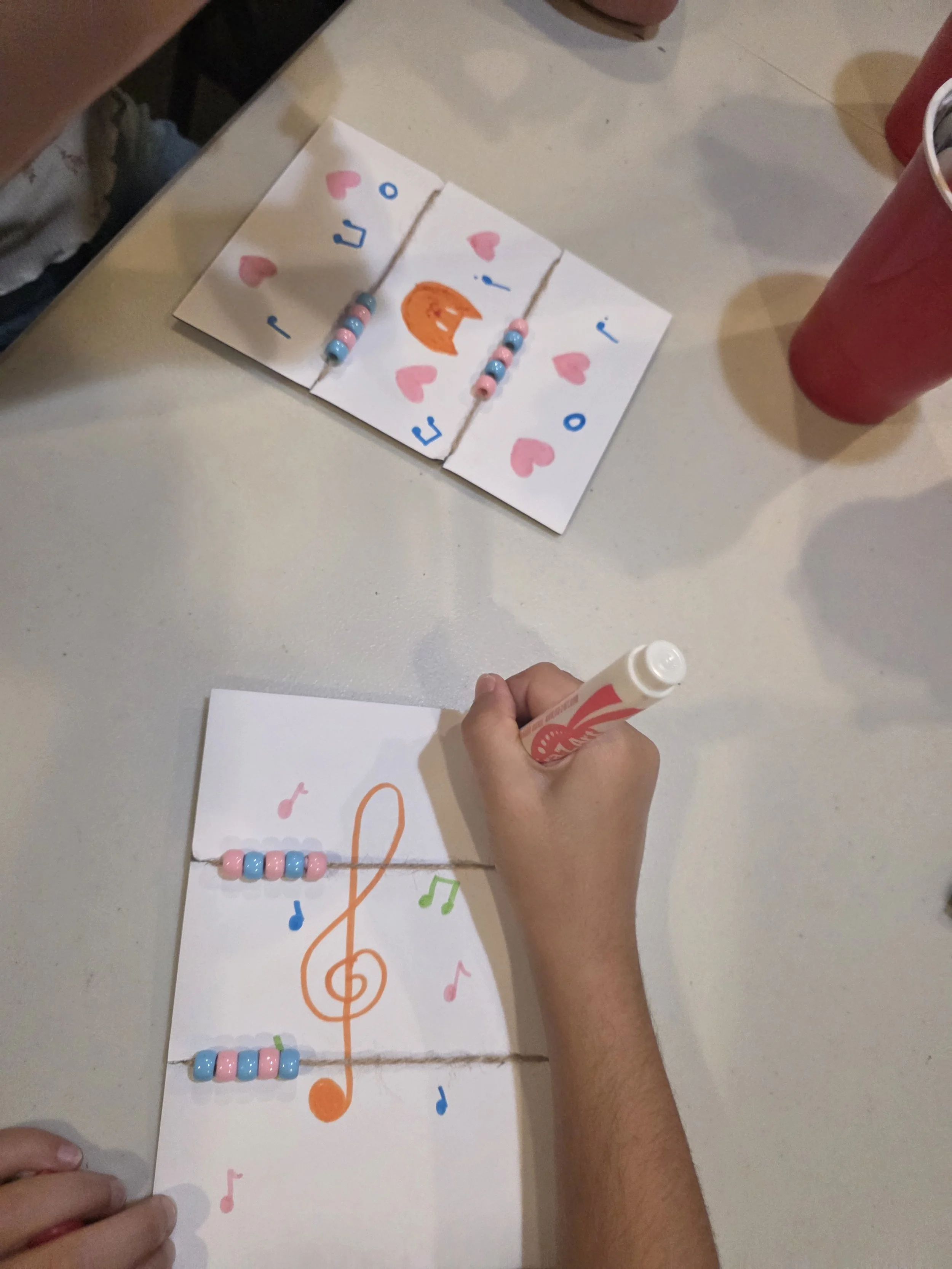
I also have the students make a practice abacus.
The original idea for this came from Wendy Stevens at ComposeCreate.com in a blog post she wrote several years ago. I have adapted the idea over time to fit the way I now talk about practice with my students.
Check Out the Original Practice Abacus Blog Post Here!
The abacus fits really well with some of the ideas I took from Molly’s book because it gives students a physical way to keep track of intentional repetitions. I am not using it to encourage students to mindlessly play something ten times in a row. We also talk about taking brain breaks, changing what they are working on, and using repetition strategically.
I want the student to decide exactly what they are working on before they start moving beads. Maybe they are isolating a tiny section of music, fixing a particular fingering, or working on one specific technical problem. The abacus then gives them an easy way to keep track of how many focused attempts they actually made.
That is important because I think all of us can sit at the piano and feel like we worked on something many times when, in reality, we probably did not do nearly as many focused repetitions as we thought.
There was also one very practical lesson from last year.
Tape was not enough. Whoopsies! Last year, several of the abacuses fell apart, so this year I used a hot glue gun on the backs. Much better.
I also noticed last year that quite a few students simply put their abacus in their piano bag and never used it. I was not terribly upset about that, but this year I wanted them to at least give it a real try. I told them it was a requirement to take it home, put it on the piano, and use it during the first few weeks of practice.
I told the parents too. At that point, I just have to hope they actually do it.
Do I expect students to use an abacus forever? No. The point is to help them experience what it feels like to narrow down a problem, work on it intentionally, and actually keep track of what they are doing.
Once they understood that there was a real purpose behind it, most of them were pretty on board with the craft.
Was It Worth Doing Again?
Absolutely.
Holding Collab Classes during Labor Day week is kind of a pain in the butt from a scheduling standpoint, but I still think it is worth it.
Instead of spending the first month of lessons repeating the same conversations individually about practice, schedules, expectations, goals, and what students should be doing at home, we sit down and talk about all of it together at the beginning of the year.
The students hear ideas from each other. They realize that everyone is busy in different ways. They have to look at their actual schedules instead of giving me the practice plan they think I want to hear. They also leave knowing what they are working toward for the year and having at least a few concrete tools they can use when they sit down at the piano.
As I am writing this, I have only seen a few students for their lessons since the Practice Workshop, so I cannot say yet what the entire year is going to look like. But so far, the practice has been fantastic. Everyone I have seen has come in having done really good work, and we are off to a strong start.
Now the goal is keeping that momentum going.
I think the biggest thing these workshops have reinforced for me is that we cannot assume students know how to practice simply because we tell them to practice.
Practice is a skill, and skills have to be taught.
For my studio, taking one class at the beginning of the year to focus specifically on that has absolutely been worth it.
If you are thinking about doing something similar in your own studio, I highly recommend trying it. It does not have to look exactly like mine. The most valuable part is simply creating space for students to think honestly about their schedules, learn how to approach their music more intentionally, and set a realistic goal for the year.
